Source foldable aluminum camping stool for hiking, festivals, and events
Compare 30 listings for the foldable aluminum camping stool featuring steel or aluminum frames and Oxford fabric options. Buyers can review specifications like weight capacity, dimensions, and customization availability from verified Chinese manufacturers.
Key considerations
Products List




Comprehensive Sourcing Guide
Strategic Sourcing Guide for Foldable Aluminum Camping Stools
Understanding Product Attributes and Material Composition
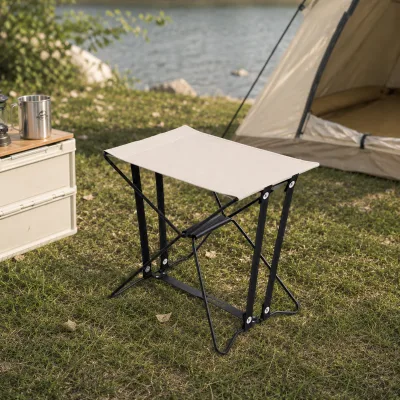
When sourcing a foldable aluminum camping stool, the primary objective is to identify a product that balances portability with structural integrity. The core material specification for this category is aluminum, which offers a superior strength-to-weight ratio compared to steel or iron alternatives. In the context of the available market data, aluminum is frequently paired with synthetic fabrics such as polyester or PE Oxford to create the seating surface. This combination ensures the stool remains lightweight for transport while providing a durable, weather-resistant sitting area.
Buyers must distinguish between different material compositions observed in the market. While the core keyword specifies aluminum, some listings may present "Steel+Oxford Fabric" or "Metal+Polyester" as alternatives. Steel variants, such as those with a "30% oxford" composition, often provide higher load-bearing capacity but at the cost of increased weight. For a true camping application, the aluminum frame is preferred to minimize the burden on the user during hiking or travel. The frame construction is typically a "Single" type, meaning it is a standalone unit rather than a stackable or multi-person configuration.
The folding mechanism is a critical technical attribute. The product must be capable of being "Folded" for storage and transport, yet the specific design may vary. Some units are described as "Undisassembly," implying that the folding action is the only method of size reduction, and the frame cannot be taken apart into individual components for shipping. This distinction is vital for logistics planning, as undisassembly units may require larger packaging dimensions compared to fully disassemblable frames. The "Rotary" attribute also plays a role; while some camping stools feature a fixed rotary mechanism for stability, others may utilize a rotary design that allows for slight angular adjustments, though the "Fixed" designation is more common for static camping furniture.
Technical Specifications and Dimensional Analysis
Technical specifications define the physical constraints and capabilities of the camping stool. Dimensions are a primary consideration for buyers, as the stool must fit within specific vehicle trunks or backpacking gear. Market data indicates a range of sizes, with specific models measuring approximately 26D x 23W x 26h cm or 10d x 30W x 4h cm. These variations suggest that "folded" dimensions can vary significantly depending on the hinge design and the thickness of the fabric. A compact folded size, such as 10d x 30W x 4h cm, is ideal for backpackers, whereas a larger footprint might be acceptable for car camping.
Load capacity is another non-negotiable specification. The observed data lists maximum weight limits of 100 kilograms and 120 kilograms. When sourcing aluminum stools, buyers should verify that the specific model meets the intended user's weight requirements. Aluminum frames generally support standard adult weights, but the connection points between the legs and the seat fabric are often the weakest links. A "Max Load" of 120kg suggests a reinforced design, likely utilizing thicker gauge aluminum or additional cross-bracing.
The shape of the stool also influences its utility. While "Round" shapes are observed in the data, camping stools often feature square or rectangular seats for better stability. The "Style" can range from "Simple" to "Modern" or "European," which often dictates the aesthetic finish and the complexity of the folding mechanism. A "Modern" style might imply a sleek, minimalistic design with hidden hinges, whereas a "Simple" style focuses on functionality and ease of manufacturing. The "Condition" is consistently listed as "New," ensuring that buyers receive factory-fresh inventory without prior wear or damage.
Compliance, Certification, and Safety Standards
Navigating compliance and certification is essential for B2B procurement, particularly when importing consumer goods. While the supplied data does not explicitly confirm specific certification status for every listed product, it references "ISO 9001" and "CE" as background standards. Buyers should treat these as verification targets rather than guaranteed attributes of every supplier. The "CE" marking indicates conformity with health, safety, and environmental protection standards for products sold within the European Economic Area. If the target market includes Europe, verifying CE compliance is mandatory.
The "Standard" attribute in the product data often refers to the packaging standard or the material composition standard. For instance, one listing notes a standard of "Steel: 30% oxford: 60% other 10%," which is a material composition ratio rather than a safety certification. Buyers must request specific test reports for structural integrity, such as drop tests or static load tests, to ensure the stool does not collapse under use. The "Standard Export Carton Package" mentioned in the data implies a baseline for shipping protection, but it does not guarantee the internal quality of the product.
Furthermore, the "prod_standard" field sometimes lists dimensions like "2522.526.5CM," which refers to the product's physical standard size rather than a regulatory standard. Buyers should not confuse packaging dimensions with safety certifications. When evaluating suppliers, request documentation that explicitly states compliance with the safety standards of the destination country. For aluminum products, this may include regulations regarding heavy metal content in the anodizing process or the flammability of the fabric.
Cost Drivers and Pricing Dynamics
The pricing of foldable aluminum camping stools is influenced by several key factors, including material costs, manufacturing complexity, and order volume. The observed price range in the market is between 1 and 20 USD. This wide variance suggests that the lower end of the spectrum likely corresponds to basic models with thinner aluminum or lower-grade fabrics, while the higher end reflects premium models with reinforced frames, custom branding, or specialized packaging.
Material costs are a primary driver. Aluminum prices fluctuate based on global commodity markets, and the thickness of the aluminum tubing directly impacts the cost. A stool using "Aluminum or Custom" material options allows for price adjustments based on the specific alloy or thickness selected. Additionally, the type of fabric used, such as "PE Oxford" versus standard polyester, affects the unit cost. Oxford fabric is generally more durable and water-resistant, justifying a higher price point.
Order volume is another significant cost driver. The observed Minimum Order Quantity (MOQ) ranges from 50 to 8844 units. Suppliers offering an MOQ of 50 are likely targeting smaller retailers or startups, while those requiring 8844 units are catering to large-scale distributors. The "40hq" capacity of 8844 pieces indicates that a single 40-foot high-cube container can hold this volume, which is a critical metric for calculating shipping costs per unit. Buyers should negotiate based on their ability to fill a container or a significant portion of one to secure the lowest possible unit price.
Customization is a major cost variable. The data confirms that "Customization" is available and that "Customized Logo" is an accepted option. Adding a custom logo, changing the color to specific Pantone shades, or altering the packaging design will increase the unit cost. The "Style" and "Color" options, such as "Blue," "Grey," or "Black," may also carry different price points depending on the dyeing process and fabric availability. Buyers should factor in these customization costs when budgeting for the total landed cost of the product.
Supplier Evaluation and Verification Protocols
Selecting the right supplier requires a rigorous evaluation process that goes beyond the initial product listing. The data indicates that products originate from "China" and specifically "Hebei, China." While this provides a geographical context, it does not guarantee the quality of the manufacturing facility. Buyers should verify the supplier's production capacity, quality control systems, and financial stability.
One key metric for supplier evaluation is the "prod_packing" method. Listings show variations such as "Standard Export Carton Package," "1PC/Storage Bag, 50PCS/CTN," and "1PCS/Carton." A supplier that offers flexible packaging options demonstrates adaptability and a focus on customer needs. The "Standard Export Carton Package" is generally preferred for international shipping as it offers robust protection against moisture and impact.
Buyers should also assess the supplier's ability to handle customization. The data shows that some products are "Customized" while others are "Non-Customized." A reliable supplier should be able to seamlessly transition between standard and customized orders without compromising quality. The "Logo" attribute confirms that branding is a common requirement, and the supplier must have the infrastructure to apply logos consistently across large batches.
Furthermore, the "Condition" of the product is listed as "New," but buyers should verify that the supplier maintains strict quality control to ensure no defects reach the market. Requesting pre-shipment inspections and samples is crucial. The supplier should be able to provide detailed photos or videos of the production line and the finished goods. The "General Use" classification as an "Outdoor Product" implies that the supplier should have experience in manufacturing items that withstand outdoor conditions, such as UV exposure and moisture.
Quality Control and Long-Term Procurement Considerations
Quality control is paramount for foldable camping stools, as failure in the field can lead to safety hazards and brand damage. The "Disassembly" attribute is listed as "Undisassembly," which simplifies the quality control process by reducing the number of potential failure points. However, it also means that the folding mechanism must be flawless. Buyers should test the hinge mechanism for smooth operation and durability over repeated folding cycles.
The "Fabric" material, whether "PE Oxford" or "Polyester," must be checked for tensile strength and resistance to tearing. The "Standard" attribute sometimes lists fabric composition, which should be verified against the supplier's specifications. A high-quality stool will use fabric that is treated for water resistance and UV protection to ensure longevity in outdoor environments.
Long-term procurement considerations involve building a sustainable supply chain. Buyers should look for suppliers who offer consistent lead times and reliable communication. The "prod_model" codes, such as "CS190," "YS-C030," and "SKY-FS007," serve as unique identifiers for specific product configurations. Maintaining a clear record of these models ensures that future orders match the original specifications.
Additionally, buyers should consider the environmental impact of their procurement. Aluminum is a recyclable material, and suppliers who use sustainable manufacturing practices may offer a competitive advantage. The "Standard" packaging should be designed to minimize waste, and the "prod_packing" method should be optimized to reduce shipping volume and carbon footprint.
Comparative Analysis of Product Variants
To assist buyers in making informed decisions, the following table compares key attributes of the observed product variants. This comparison highlights the differences in material, dimensions, and usage scenarios.
| Product Model | Material | Folded State | Max Load | Color | Style | Primary Usage |
|---|---|---|---|---|---|---|
| CS190 | Metal (Steel/Oxford) | Folded | Not Specified | Blue | European | Mountain |
| YS-C030 | Aluminum or Custom | Unfolded | 120kg | Grey | Modern | Hotel, Home |
| YS-CL030 | Metal+Polyester | Unfolded | 100kg | Black | Simple | Outdoor Product |
| SKY-FS007 | Steel+Oxford | Folded | 100kg | Not Specified | Not Specified | General Outdoor |
| SKY-FS006 | Metal+Polyester | Folded | Not Specified | Not Specified | Not Specified | General Outdoor |
This table illustrates that while all products fall under the broad category of foldable stools, their specific applications vary. The "Mountain" usage suggests a need for high portability, whereas "Hotel, Home" usage prioritizes comfort and stability. The "Max Load" varies between 100kg and 120kg, indicating different structural reinforcements. Buyers should align their selection with the intended use case to ensure optimal performance.
In conclusion, sourcing a foldable aluminum camping stool requires a detailed understanding of material properties, technical specifications, and supplier capabilities. By carefully evaluating the factors outlined in this guide, buyers can secure high-quality products that meet their specific needs while maintaining cost efficiency and compliance with international standards.
FAQs
What materials are used for the frame and seat?
Frames are typically made of steel or aluminum, while seats use PE Oxford or polyester fabric. Some models specify a composition of 30% steel and 60% oxford, ensuring durability for outdoor use without compromising portability.
Can I customize the logo on the camping stool?
Yes, suppliers accept customized logos for branding purposes. This customization is available alongside options for specific colors like blue, grey, or black, allowing buyers to tailor the product to their brand identity.
What is the maximum weight capacity for these stools?
Maximum weight limits observed range from 100 kilograms to 120 kilograms depending on the model. Buyers should verify the specific model specifications, such as SKY-FS007 or YS-C030, to ensure the load capacity meets user requirements.
How are the products packaged for export shipping?
Packaging options include standard export cartons or individual storage bags with 50 pieces per carton. Specific models may ship as one piece per carton, ensuring protection during transit while optimizing container space for large orders.
Are these stools foldable for easy transport?
Yes, the products are designed to be folded for compact storage and transport. Some units are described as undisassembly, meaning the frame folds but cannot be taken apart into separate components for shipping.
What is the minimum order quantity for bulk purchases?
Minimum order quantities vary significantly, ranging from 50 units up to 8844 units for a full container load. Buyers can find suppliers with lower MOQs for smaller retailers or higher volumes for large-scale distribution needs.